
 In over 40 years of working in domestic infant adoption, I’ve enjoyed witnessing the evolution of open adoption. So what is an open adoption, exactly? At its core, it’s an adoption arrangement where birth parents and adoptive families stay connected after placement through updates, photos, letters, or visits, instead of losing touch completely.
More and more, birth parents and hopeful adoptive parents are seeking this kind of openness, and it’s become the heart of how we help build families today.
My Own Answer to “What Is an Open Adoption?”
I’ve been providing open adoption services for over four decades, and I’ve adopted a baby myself, so I don’t just teach this; I’ve lived it. Many years ago, I lost seven pregnancies before I went on to adopt. That experience is what led me to start helping other families adopt.
At Lifetime Adoption, we primarily handle newborn adoptions, but we also help children who would otherwise enter foster care. We complete 8 to 10 adoptions a month across the United States. We cry every day, and we laugh every day at Lifetime Adoption; you really need to have a passion for this work.
Half the phone calls we get are crisis calls. I remember one where the caller was dying of cancer. She had no extended family and needed to find a family before she passed to adopt her three children and keep them all together. It’s important to us that siblings remain together. The children were two, three, and seven years old, and we needed a family sensitive enough to stay in contact with their mother until she passed and help the kids acclimate to their new lives. That transition time is everything, and it’s a powerful example of what open adoption can look like in its most tender form.
What’s an Open Adoption Like for a Birth Family?
For a birth family, the process starts with choosing an adoptive family from a large pool of pre-screened parents who’ve all completed home studies. Birth mothers reach out to Lifetime by phone, live chat, our website, or social media, and share their situation.
There’s never a cost to birth parents or birth grandparents raising these children. The adoptive parents cover the fees. These are permanent adoptions, not foster care. My goal has always been to find permanent, loving homes for children.
Birth mothers are sometimes seen as “bad mothers,” but the opposite is true. They’re putting their own interests aside and asking themselves, “What’s best for my child? What can I give them?”
That’s one of the biggest reasons open adoption matters so much: it gives birth mothers the chance to stay part of the answer to that question, instead of losing the opportunity for ongoing contact altogether.
Why Fear Gets in the Way
Sometimes we’ll still get a birth mother who requests a closed adoption. She’ll say, “I just want to get it over with and go on with my life.” In my experience, closed adoption is typically not good for her emotional health. There’s no closure, and there will always be uncertainty about what became of her child. That fear usually grows out of low self-esteem and an impending sense of loss.
At Lifetime Adoption, we connect these women with a network of past birth mothers who’ve walked the same road. After talking with a peer, most potential birth mothers feel reassured and choose openness instead.
Prospective adoptive parents feel their own version of this fear. They often ask for a closed adoption because they don’t want to meet the birth mother or have any contact with her, usually because they’re afraid the birth mother will one day try to take back the child.
Often, they simply don’t understand what open adoption means and assume it’s similar to co-parenting. After some discussion, most are willing to consider at least a semi-open adoption and a single meeting with the birth mother before placement.
Ultimately, the reluctance to explore open adoption is based on fear. But 2 Timothy 1:7 reminds us that God has not given us a spirit of fearfulness, but one of power, love, and sound judgment. That fear turns the focus inward, toward the birth mother’s or adoptive parents’ own anxiety, when the real focus should be the benefit of the child.
Open Adoption Is a Win-Win Situation
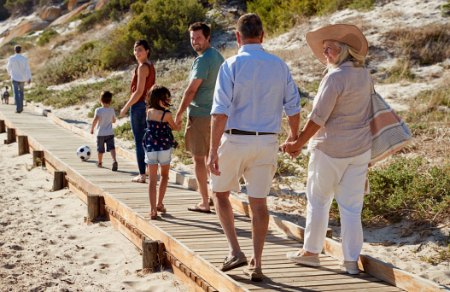
With a Lifetime adoption, you can have contact with your child afterward. It’s a safe adoption; kids aren’t confused. They know who their birth parents are, and they know who their adoptive parents are. That’s really the best answer to “What is an open adoption?”
It’s a relationship built so no one has to wonder. Adoptive families get access to important medical history, and children grow up with more peace, knowing they’re loved by their birth parents. They don’t grow up resenting their birth parents, which is one of the fears people carry into this process.
The birth parents get the satisfaction of knowing they made the right choice, and the adoptive parents get the medical information they need to raise their child well. That’s what adoption is all about: raising a child in the best possible environment. It can mean setting your emotions aside until you make peace with the arrangement, but it’s worth it. The benefits far outweigh the risks.
A Story That Came Full Circle
Some blessings come full circle, and a few weeks ago, I was blessed to experience one myself.
I was sitting on my porch, enjoying a beautiful California day, when a petite blonde woman stopped by to ask my neighbors about the color of their house. I recognized her face but couldn’t place her name.
I smiled and said, “I know who you are.”
She looked at me and asked, “Who are you?”
I told her, “I’m Mardie Caldwell.”
Her eyes lit up immediately. “Oh my gosh, Mardie… you’re still living here! You’re the one who brought me my son.”
In that instant, we both remembered. Sue was one of our adoptive mothers from 28 years ago, and we’d been living in the same town all along without realizing it. She’s lived in that same home for 45 years, raising her son as a sweet, wonderful single mom. Life had just gotten busy, and we’d lost touch. The little boy I remembered is now a 6’6″ young man, and he recently met his biological father and his whole extended family. It was wonderful to hear.
As I sat back down on my porch, I couldn’t help but reflect on what a privilege it’s been to serve families through Lifetime Adoption. Moments like that remind me that adoption isn’t just about one day; it’s about a lifetime. Families grow, children become adults, and years later, those relationships are still treasured. That’s the truest answer I can give to “what is an open adoption”: it’s a bond that keeps giving, long after the paperwork is done.
To our Lifetime Adoption team: thank you. Every phone call you answer, every family you encourage, every birth mother you support, and every detail you handle matters more than you may ever know. We don’t always get to see how the stories we’re part of turn out. But every once in a while, we get a beautiful reminder. That porch visit was one of those days.
Openness Isn’t One-Size-Fits-All
If you’re hoping to adopt, I encourage you to take the time to really research open adoption. There are varying levels of contact, from emails sent through an adoption professional to annual in-person visits. These visits happen in comfortable, public, child-friendly settings.
Birth parents understand that openness doesn’t mean shared custody. You are the parents. They simply want to know how their child is doing. That knowledge is powerful: for many birth parents, it’s reassurance that they made the right decision, both in choosing adoption and in choosing you.
We tell every family we work with, “This is a lifetime adoption, not a week-long adoption.” It’s a real commitment, and anyone considering it should take the time to understand what it involves. I’ve written six books on adoption and have spoken about it on the Today Show, Larry King, ABC, FOX, NBC, and BBC — and after all these years, I’ve still seen more great open adoptions and beautiful birth mother relationships than I can count.
Questions about open adoption? Call Lifetime Adoption at (727) 493-0933 to get answers from the experts, or begin your open adoption journey today by filling out Lifetime’s free online application.
Frequently Asked Questions About Open Adoption
What is an open adoption?
An open adoption is an arrangement where birth parents and adoptive families stay in contact after placement, whether through emails, letters, photo updates, phone calls, or in-person visits. The level of openness is agreed upon by both parties and can range from occasional written updates to regular visits.
Is open adoption the same as shared custody?
No. In an open adoption, the adoptive parents are the child’s legal parents and make all parenting decisions. Openness simply means the birth parents receive updates and, in many cases, ongoing contact, not that custody or decision-making is shared.
How much contact happens in an open adoption?
It varies by family. Some birth parents and adoptive families exchange emails through an adoption professional, while others build a relationship that includes annual visits. The right amount of openness is determined between the two parties, often with guidance from an adoption professional such as Lifetime Adoption.
Why do some birth mothers choose a closed adoption instead?
Some birth mothers request a closed adoption because they want closure or feel it will be easier emotionally. In practice, closed adoption often leaves more uncertainty and less peace of mind. Connecting with other birth mothers who have chosen open adoption often helps ease that fear.
Why are adoptive parents sometimes hesitant about open adoption?
Adoptive parents may worry that contact with the birth mother poses a risk, such as a fear that she could try to reclaim the child. This isn’t how legal, finalized adoptions work. Once an adoption is finalized, the adoptive parents are the child’s permanent legal parents, and most hesitant families become comfortable with openness once they better understand what it involves.
Does the child benefit from an open adoption?
Yes. Children raised in open adoptions typically grow up with a clearer understanding of their story, access to their birth parents’ medical history, and less confusion about their identity than children in closed adoptions.
Is there a cost to birth parents for choosing open adoption?
No. Adoptive parents cover the costs associated with the adoption process. There is never a cost to birth parents or birth family members raising the children themselves.
How do I start the open adoption process?
Birth parents can reach out to Lifetime Adoption by phone, text, live chat, or through the website to discuss their situation confidentially. Hopeful adoptive parents can begin by completing Lifetime’s free online application.
Editor’s Note: This article was originally published on March 7, 2020, and has since been updated.
Trackbacks/Pingbacks